Proof of Decency: The Records Social and Private Landlords Must Hold When the Decent Homes Standard Arrives
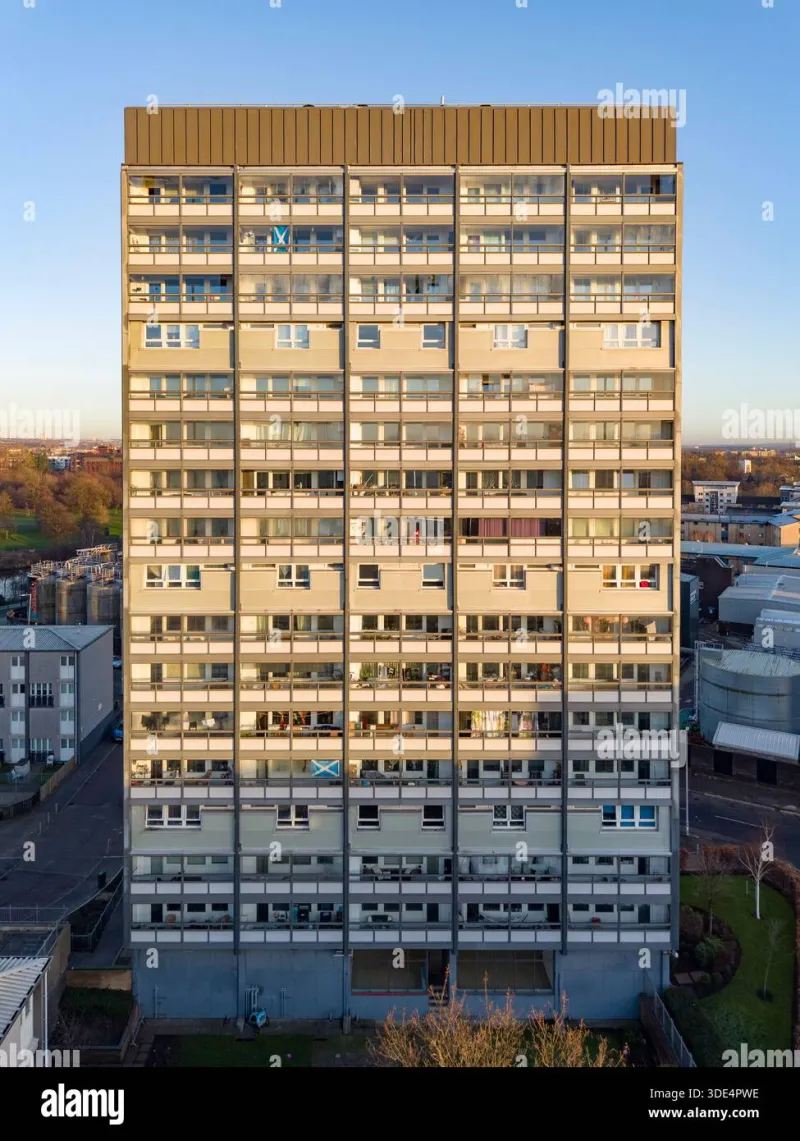
Photo: social housing apartment block exterior UK, via c8.alamy.com
The Decent Homes Standard has governed social housing in England since 2006, yet most private landlords have never had to engage with it. That is set to change. Under the Renters' Rights framework, the Standard is expected to apply to privately rented homes, bringing decades of social-housing compliance discipline into a sector that has historically run on looser habits.
The practical consequence is documentation. A property may be perfectly decent in fact, but under a regulated regime, decency must be demonstrated. This article sets out what that demonstration looks like in paper form — and what tenants can legitimately ask to see.
What the Standard Actually Requires
The Decent Homes Standard rests on four tests: the home must meet the statutory minimum for housing health and safety (the HHSRS); be in a reasonable state of repair; have reasonably modern facilities and services; and provide a reasonable degree of thermal comfort. Each test maps onto records a landlord either has or does not have.
Thermal comfort, for instance, ties directly to the Energy Performance Certificate and the heating system's certification. Reasonable repair connects to maintenance histories and condition surveys. An auditor, ombudsman or tribunal will not take a landlord's word — they will ask for the file.
The Core Document Set
A compliant landlord file for Decent Homes purposes should contain, at minimum:
- A current EPC — the thermal comfort limb makes this non-negotiable, and an expired certificate is an exposed flank.
- Gas Safety Records renewed annually, and electrical installation condition reports on the prescribed cycle.
- HHSRS assessment records — ideally a formal self-assessment or inspection report identifying hazards and the remedial action taken.
- Maintenance and repair logs — dated records of jobs raised, contractor invoices, and completion confirmations. A pattern of unanswered repair requests is exactly what enforcement officers look for.
- Damp and mould correspondence — following the tragic case of Awaab Ishak and subsequent legislation, records showing prompt investigation of damp reports are now a distinct compliance expectation.
- Stock or property condition surveys — periodic assessments establishing that kitchens, bathrooms and heating systems fall within expected lifespans.
Social landlords have run this machinery for years through planned maintenance programmes. Private landlords transferring the discipline need not replicate the scale, but the principle — every claim backed by a dated document — is identical.
Retention and Organisation
Records should be held against each individual property, not lumped into a general portfolio folder. A simple structure works: one digital file per address, subdivided into certificates, inspections, repairs and correspondence. Statutory certificates should be retained for the full validity period plus a margin; repair records and condition surveys have evidentiary value for years after creation, particularly in disrepair disputes where historical patterns matter.
Digital storage is acceptable, provided documents are retrievable on request. A landlord who cannot produce a gas safety record within a reasonable timeframe is, for practical purposes, a landlord without one.
What Tenants Are Entitled to Request
For tenants, the extension of the Standard creates genuine leverage — but only if exercised in writing. Verbal complaints evaporate; emails and letters create records.
A tenant who believes their home falls below standard may reasonably request:
- A copy of the property's EPC.
- The most recent gas and electrical safety certificates.
- Details of the landlord's repair and maintenance policy, including response timescales.
- Written confirmation of the outcome of any inspection relating to a reported hazard.
- A timescale for remedying a specific documented defect.
Where requests go unanswered, the paper trail itself becomes the case: evidence for the new private rented sector ombudsman, the local authority's enforcement team, or a rent repayment argument where applicable. Tenants need not know the Standard clause by clause — they need only document the condition, request action in writing, and keep every reply.
Preparing Before Enforcement Arrives
The prudent move for landlords is an internal audit conducted now, before any inspection or complaint forces the issue. Walk each property against the four tests, list the supporting documents you can produce within twenty-four hours, and note the gaps. Where a certificate is missing or a repair history is thin, remedy it deliberately rather than defensively.
The Decent Homes Standard, at its heart, is not an onerous technical regime. It asks landlords to know the condition of what they let and to prove it on demand. In a compliance landscape increasingly built on evidence rather than assurance, the file is the defence — and the landlords who build it early will find the transition a formality rather than a crisis.