One House, Many Doors: Running Right to Rent Checks on a Shared Let Without Missing a Document
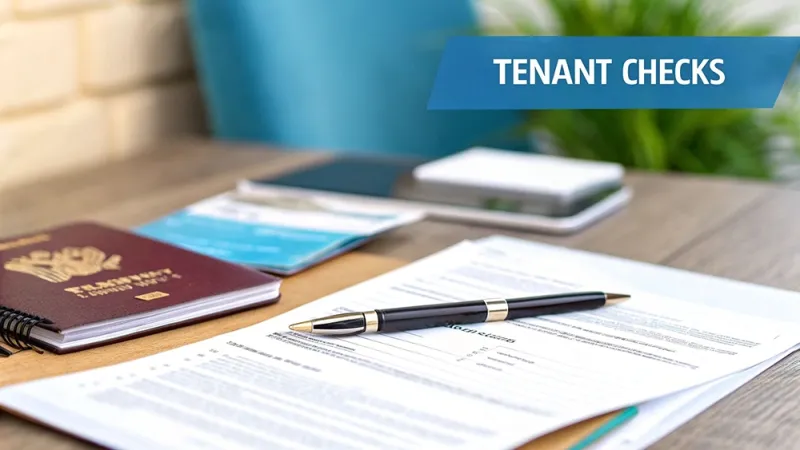
Photo: landlord checking passport documents with tenants at house share viewing, via www.roomsforlet.co.uk
A single-tenancy let means one Right to Rent check. A house share means four, five, sometimes six — each tenant individually checked, each document individually verified, each expiry date individually diarised. For landlords operating houses in multiple occupation, the administrative load is where compliance is most often lost, and where penalties of up to £10,000 per occupier become a live risk.
A Working Example
Consider a typical scenario. A five-bedroom terraced house is let on individual agreements: two domestic students, one EU national who arrived after 2021, one British citizen between addresses, and one applicant from outside the UK with a visa permitting study. Five tenants, five different evidential routes, one landlord responsible for all of them.
The Home Office accepts two checking methods: a manual document check, or an online check using the Home Office's digital service where the applicant has a share code. The correct route depends entirely on the individual — and getting that mapping right is the core skill of multi-occupancy compliance.
The Students with British Passports
For the two UK students, the manual route is straightforward. A valid British passport, checked in the tenant's physical presence against the original document, with copies taken and dated, satisfies the check. Landlords should record the date of the check and note that a statutorily required check was performed. A photocopy of a passport photographed over WhatsApp is not a compliant check; the original must be seen.
The EU National
EU, EEA and Swiss citizens who arrived after 1 January 2021 no longer benefit from automatic acceptance of a national passport alone. If they hold settled or pre-settled status, the evidence is digital: the applicant obtains a share code from the Home Office's View and Prove service, and the landlord conducts the check online, saving and dating the confirmation. Accepting a passport at face value for this tenant would be a failed check — one of the most common errors in mixed-nationality house shares.
The Visa Holder with a Time-Limited Permission
The overseas student's visa is the document that triggers the follow-up regime. Where permission to rent is time-limited, the landlord must conduct a follow-up check at the point the permission expires — or twelve months later, whichever is sooner. Crucially, the initial check should be logged with a diary reminder. If the tenancy continues and no re-check occurs, the landlord's statutory excuse lapses, and any penalty defence evaporates with it.
Where a follow-up check shows the tenant's application to extend is pending, the Home Office Landlord Checking Service can be used to obtain a confirmation while the matter resolves.
The British Applicant with No Fixed Address
Here is where landlords frequently overcomplicate. A British citizen who has recently moved and cannot immediately produce a passport can rely on alternative documents under the Home Office's lists — a birth certificate combined with a National Insurance number, for example, or in some circumstances a Home Office travel document. The landlord's obligation is to accept a valid document from the approved lists, not to demand the strongest possible evidence. Requiring a passport when a birth certificate and NI number would suffice is not thoroughness; it can constitute unlawful discrimination.
Where Compliance Crosses into Discrimination
That last point deserves emphasis. Right to Rent checks must be applied uniformly to all prospective adult occupiers. Operating a two-tier system — demanding passports only from applicants who appear or sound foreign, or declining overseas applicants because their documents take longer to verify — exposes a landlord to a discrimination claim under the Equality Act 2010, entirely separate from Home Office enforcement. The safest practice is a written policy: every adult occupier is checked the same way, at the same stage, before any agreement is signed.
Records, Records, Records
Every check should generate a dated record: a copy of the document or a saved online confirmation, a note of the check date, and — for time-limited permissions — a scheduled follow-up date. Retain records for at least twelve months after the tenancy ends. In a house share, maintain a simple spreadsheet listing each occupier, their check type, document reference and next review date. It is unglamorous, but in the event of an inspection or a dispute, that spreadsheet is the difference between a statutory excuse and a penalty notice.
The Takeaway
Multi-occupancy lets do not change the law; they multiply the opportunities to get it wrong. Map each tenant to the correct checking route, diarise every expiry, and apply the process identically to everyone who applies. Do that, and the paper chase becomes routine.